
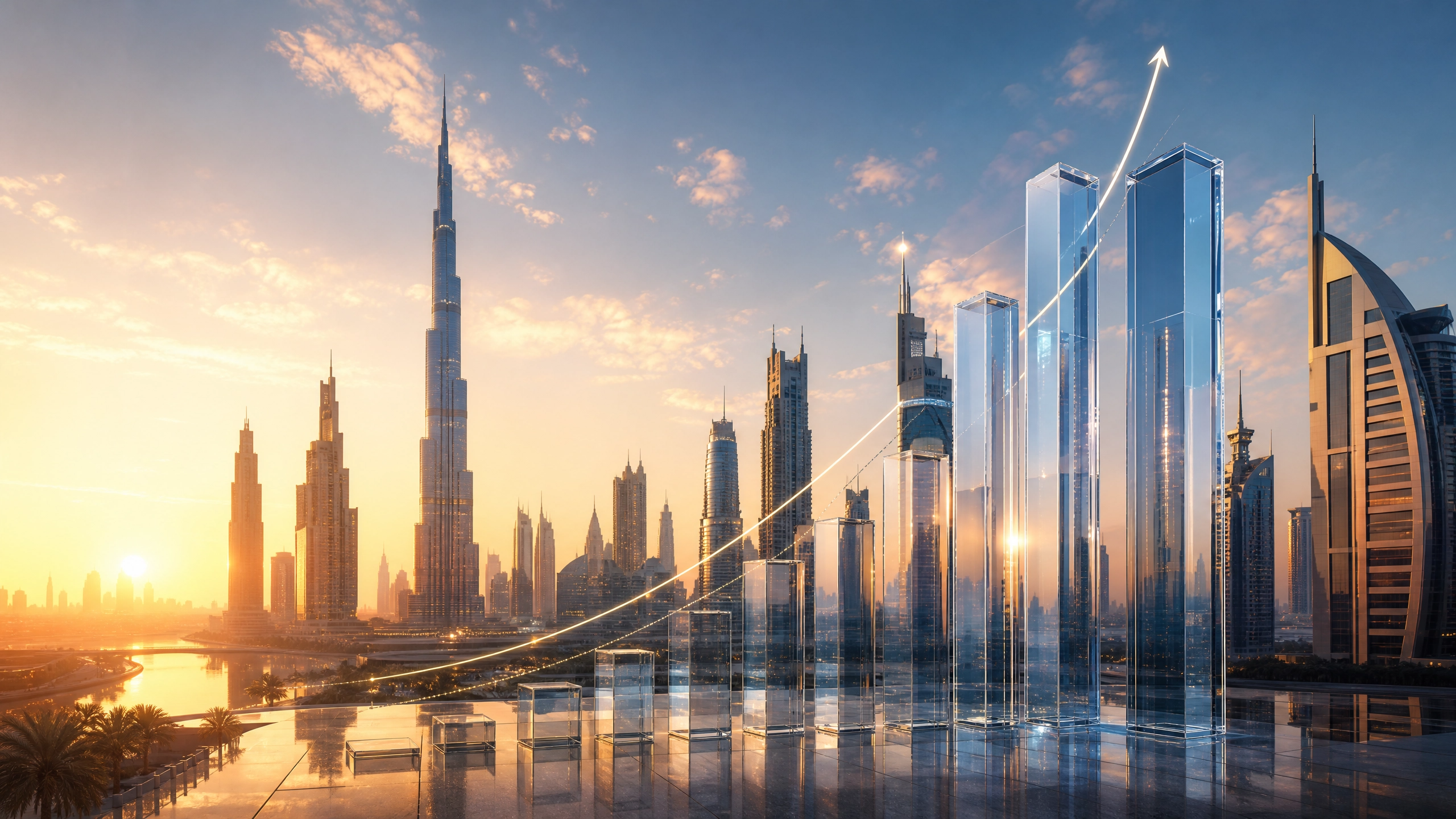
The year 2026 represents a transition period for the Dubai real estate sector, moving away from speculative and short-term trends towards a more mature and sustainable structure. According to the analyzed Dubai real estate market report 2026 data, the market is exhibiting strong growth momentum based on genuine end-user demand and long-term investor confidence.
In this detailed blog post, we examine the market’s current sales volumes, rental yields, luxury segment trends, and the overall supply-demand balance.
1. General Market Overview and Transaction Volume
Although 2026 began with the short-term impact of regional conflicts, the market quickly recovered and continued its growth. When transaction volumes and market dynamics are analyzed, the following results emerge:
-
At the very beginning of the year, in January 2026, a record transaction volume worth 72.4 billion AED ($19.7 billion) was realized.
-
In the first quarter (Q1) of 2026, residential sales reached a value of 176.7 billion AED with 47,996 transactions.
-
These figures indicate a year-on-year increase of 23.4% in value and 5.5% in volume.
-
Despite a 31% decline in transaction volume in the second quarter, prices across the market maintained their upward trend.
-
In the first half (H1) of 2026, the total number of transactions approached the 50,000 mark.
-
The market is increasingly moving away from the “flipping” (quick profit through contract transfer) trend seen in the 2023-2024 period.
-
Off-plan (under construction) sales continue to be the main driver of the market, accounting for approximately 74% of total transactions.
2. Price Trends and Rental Yields
The Dubai real estate market report 2026 data shows that property values and the rental market continue to satisfy investors.
Price Trends:
-
In mid-2026, the median residential sales price across Dubai is approximately 1,745,000 AED.
-
The average square metre price was recorded at 1,770 AED, which represents a clear year-on-year increase of 14%.
-
Villas are expected to perform much stronger compared to apartments, with an estimated 17.7% increase in value.
-
Central areas with limited land supply, such as Downtown Dubai and Business Bay, are expected to remain more resilient in terms of pricing.
Rental Yields (ROI):
-
Records were broken on the rental side; in June 2026, over 40,000 lease agreements were registered, reaching the highest figure ever recorded in a single month.
-
The average rental yield in the city is in the 6-7% range.
-
This yield rate is quite high compared to mature markets like London and New York, where yields generally remain in the 2-4% range.
-
The zero income tax advantage makes this high yield even more attractive for investors.
3. Luxury Segment and Branded Residences
The luxury real estate sector continues to be one of the most stable and reliable areas of 2026. The interest of high-net-worth individuals (HNWIs) in the city is particularly expanding this segment.
-
Luxury segment sales over 10 million AED showed a 26% year-on-year increase in Q1 2026, reaching an investment of 87.71 billion AED.
-
This amount accounts for exactly 35% of the total residential value in the first quarter.
-
The most expensive apartment of the quarter was sold in Aman Residences Tower 2 for 422 million AED, while the most expensive villa was sold in the Jumeirah First area for 350 million AED.
-
Branded residential projects such as Four Seasons, Armani, Aman, Six Senses, and Atlantis The Royal achieve a resale premium of between 15-20% compared to their unbranded peers.
-
According to Bloomberg’s report, Dubai outperforms Lisbon and Athens by 40% in its high-net-worth individual retention rate.
4. Supply Pipeline, Deliveries, and Highlighted Areas
Even though the number of new homes entering the market is increasing, construction times and the market’s absorption power balance this process.
-
There is a planned new housing supply of a total of 426,182 units for the 2026-2029 period.
-
Project delivery times, which historically averaged 1,340 days, have now dropped to approximately 880 days due to increased construction speed.
-
Current housing absorption rates in Dubai hover in the 65-79% range, which is consistent with the city’s long-term average of 73%.
-
The most prominent areas with the highest transaction volumes in 2026 were Jumeirah Village Circle (JVC), Business Bay, Dubai South, Dubai Islands, and Dubai Creek Harbour.
-
DAMAC and Emaar lead with 13% shares each in residential units delivered in the first half of the year; followed by Select Group (7%), Deyaar (7%), and Sobha (5%).
5. Macro Outlook and Risk Factors
As in any healthy market, there are macroeconomic dynamics and certain risks that investors should consider.
-
Dubai’s zero corporate tax, zero income tax, and zero capital gains tax implementations are a huge advantage for international investors.
-
The Central Bank expects a national growth rate of approximately 4.9% for 2025, heavily supported by strong non-oil sectors.
-
Significant increases in imported material and labour costs are a major factor pushing off-plan project pricing upwards.
-
Intensive project deliveries coinciding in the same period in areas like Business Bay may create short-term price and rental pressure (oversupply risk).
In Conclusion; The year 2026 proves that the market has entered a safer maturation phase. The most logical strategy for investors is to avoid short-term speculative transactions and focus on quality projects produced by reliable developers with strong rental yields.